
New Berlin Previous Resident Sources
The source depends on the time period and on whether the goal is an owner or an occupant. Current parcel data supplies the tax key and legal description. Recorded instruments then build an ownership chain. Directories, census schedules, newspapers, and obituaries can add household evidence. The research found no complete official New Berlin street-number crosswalk or later city-directory run, so a blank year must remain a gap until a custodian or dated map fills it.
| Source | Years It Covers | Where Held | What It Shows |
|---|---|---|---|
| Recorded documents | 1994 to present online index | Waukesha County Register of Deeds | Parties, instruments, dates, legal descriptions |
| Tract and subdivision indexes | 1848 to 1994 | Register of Deeds online tools | Earlier deed-book paths by land description |
| 1873 atlas and directory | 1873 | Wisconsin Historical Society online | Plat, landholders, names, old places |
| Census and genealogy databases | Varies by collection | New Berlin Public Library | Households, relationships, historic context |
| Permits and city archives | Record-specific | New Berlin departments | Projects, applicants, meetings, inspections |
For a recent transfer, start with Tax Listing and the recorded-document index. For land before 1994, shift to the tract or subdivision index and follow book and page. For a household in an older era, use the 1873 atlas, library databases, census materials, newspapers, and the county genealogy room. Each row supplies a different kind of evidence about previous residents.
Anchor New Berlin Address History
First standardize the current address through USPS, then search Waukesha County Tax Listing by address or tax key. Grid-style New Berlin numbers must keep every directional letter and digit. If the full search fails, county instructions give a grid-number method that omits the street name. Open Property Details and record the situs address, tax key, legal description, subdivision, lot and block, or certified survey map reference.
The legal description is the durable bridge between old and new records. Street names, mail labels, numbers, and units may shift. A platted lot or metes-and-bounds description can survive those changes. Compare county GIS with city GIS/LIS for context, but treat map lines as informational. A recorded plat, certified survey map, or survey has the stronger boundary role.
Trace Waukesha County Deeds Backward
A deed chain tracks owners, not everyone who occupied the property. The Waukesha County Register of Deeds tools include current recorded documents plus older tract and subdivision indexes. The county does not provide an internet owner-name property search and does not conduct title searches for the public. Carry a legal description or instrument reference from the parcel record instead.
- Copy the current parcel's legal description and document references from Tax Listing.
- Locate the newest transfer by legal description, instrument, book and page, or map route.
- Read the grantor as seller and grantee as buyer, then note the recording date.
- Search the seller's earlier acquisition with the same parcel clues and repeat.
- Before 1994, use the subdivision or tract index to reach the deed book and page.
- Contact the Register of Deeds when online images or index links stop short.
- Grantor and grantee
- The grantor transfers an interest; the grantee receives it.
- Chain of title
- The linked sequence of recorded transfers for one property.
- Legal description
- The land description used in records, often more stable than a street address.
- Metes and bounds
- A land description using bearings, distances, monuments, and boundary calls.
New Berlin's Long Land Index
Waukesha County's land chronology reaches much farther back than its main modern index. Public tract and subdivision indexes cover 1848 through 1994. Historical book and page references and images can reach early county volumes even when an index is incomplete. For platted land, search subdivision name with lot and block. For unplatted land, use the metes-and-bounds tract path.
The successful manifest capture shows the tract-index source used for early land research.
The screen is an index route, not proof of a complete ownership chain. Open the cited instrument or request a copy, then confirm that its legal description matches the property under study.
Previous Residents in the 1873 Atlas
The Wisconsin Historical Society's digitized 1873 Atlas of Waukesha County includes a New Berlin plat map and directory. It offers a bridge between names, historic land divisions, and place labels. Prospect Hill and New Berlin Center are useful search terms drawn from official city history. They can lead to deeds, newspapers, church records, and historical society files.
The atlas image below comes from the successful manifest capture. It helps orient research before a modern street address existed in its current form.
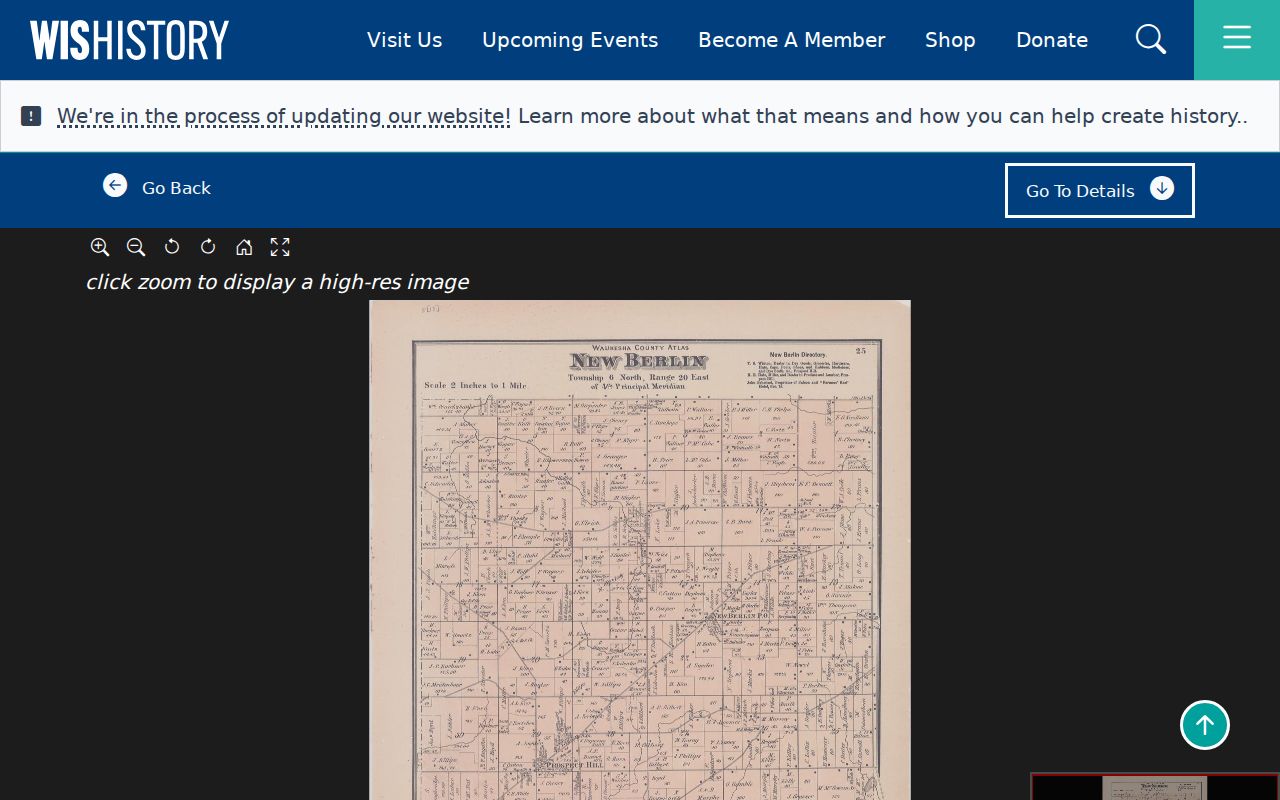
Match atlas names to legal descriptions and later deeds rather than forcing a modern number onto an old map. The research found no official citywide old-to-new address table.
New Berlin Address Changes
No complete renumbering, annexation, or street-name crosswalk appeared in the official sources reviewed. This is a real break in a previous residents search, not a reason to guess. For a specific street and date, request historical maps, plats, municipal resolutions, assessor cards, engineering records, or GIS files. The City Archive offers category, date, keyword, and document-title paths through meeting and project material.
Old newspapers may reveal when a road, subdivision, business, or civic site used another label. New Berlin Citizen issues begin in 1958 in the holdings described by the research, while New Berlin Post and New Berlin-Muskego Post titles form another run. Search each title variant and date range separately. A newspaper address remains a lead until a deed, map, permit, or directory confirms it.
Library Paths to Past Residents
The New Berlin Public Library resources include Ancestry Library, HeritageQuest, HeritageHub obituaries and death notices, Archive of Wisconsin Newspapers, BadgerLink, and history reference tools. Access varies. Some databases require a library card or use inside the building, so the catalog and staff desk are key fallbacks when remote access fails.
Search a surname with the street, old place label, spouse, event, and date range. An obituary may connect relatives and prior communities. Census and genealogy records can place a household near a known parcel. These records support a claim about past residents only when names, dates, and location details align.
Build New Berlin Household Timelines
Owners are only one layer. Directories, census schedules, obituaries, and newspapers can identify people associated with the same land or address. The research did not establish a complete local run of criss-cross directories, so check the library catalog and staff rather than claiming missing years exist. The known collections are described more fully on the New Berlin directory book page.
Use a repeatable process to keep each household claim tied to evidence:
- Place each deed owner on a timeline with recording date and legal description.
- Search the closest directory or address-arranged source for the same site.
- Check the nearest public census schedule, allowing for changed numbers.
- Search newspapers and obituaries by name, street, place, and date range.
- Label owner, occupant, relative, and neighbor evidence separately.
Probate records can close part of the trail when an owner or resident died. Waukesha County Probate Court's genealogy route can point to heirs, inventories, and related files. County vault and genealogy sources also hold obituary, newspaper, military, land, and vital materials. Contact the county for an appointment or repository guidance when the online path ends.
Lawful use. Research previous residents for house history, genealogy, or personal curiosity. Never use a record trail to track, threaten, or harass a living person.
Verify New Berlin Previous Residents
A deed proves a recorded transfer, not daily occupancy. A tax entry ties information to a parcel, not every person inside it. A directory or newspaper can place a name at an address on a publication date, but errors and time gaps remain. Census records show a household on an enumeration date and may use old numbering. Obituaries and probate files can connect family and property, subject to access and transcription limits.
For each previous resident, save the source URL or citation, search date, exact spelling, location text, record date, and what the source did not show. Seek two independent sources when possible. If evidence conflicts, keep both entries and explain the difference. Trusts, estates, delayed recording, and legal-description changes often account for a mismatch between the deed chain and the people remembered at a home.